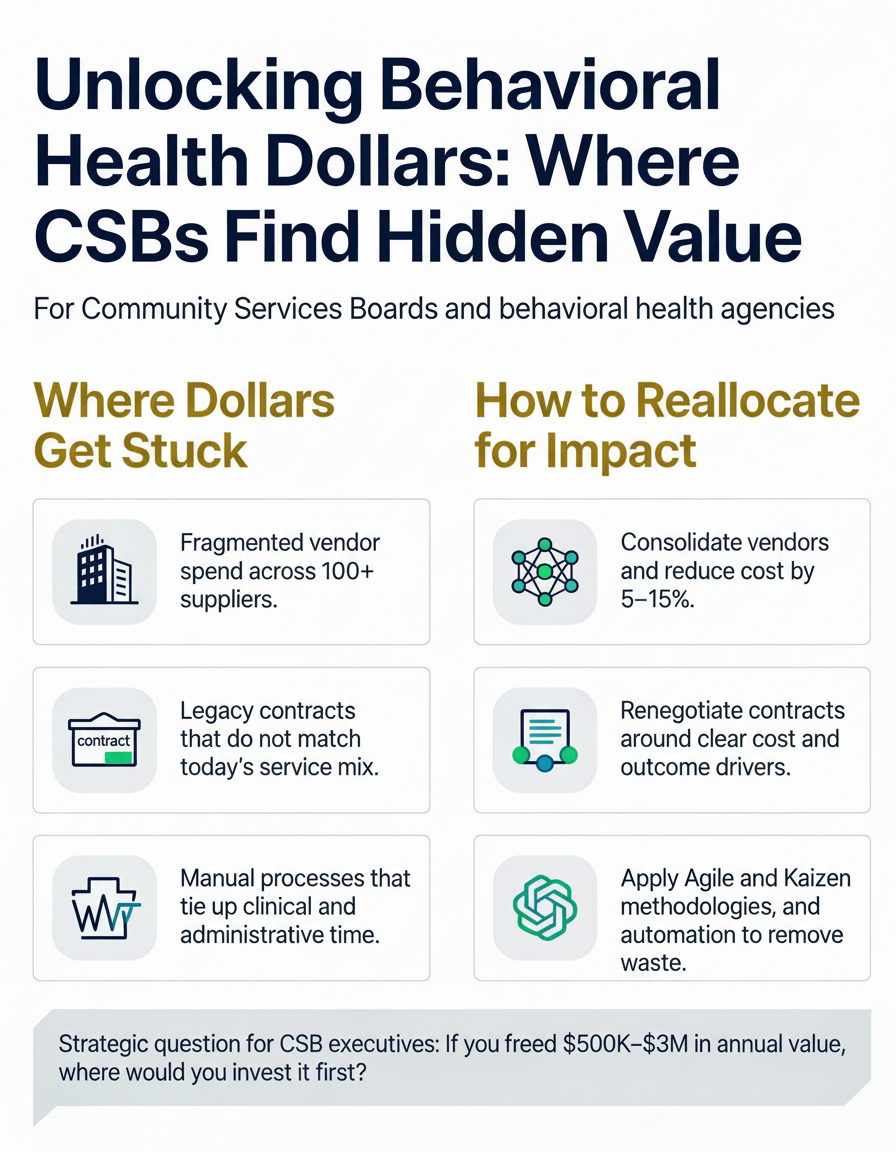
For behavioral health, the “working capital” problem usually shows up as frozen hiring, waitlists, and compliance stress—not just finance committee slides. Community Services Boards are being asked to expand access, meet DBHDS expectations, and stand up new models like CCBHCs, often with the same or shrinking flexible dollars.
When we've conversed with individuals in these fields, we keep hearing the same traps: fragmented vendor spend across 100–150 suppliers, underleveraged cooperative purchasing, and contracts that quietly lock you into prices and terms that no longer match your service mix. At the same time, administrative workflows and billing processes are tying up staff capacity that could be serving clients or improving outcomes.
Freeing working capital in this context is less about “cutting costs” and more about redirecting resources back to mission-critical work—clinical capacity, crisis response, outreach, and care coordination.
If you’re leading a CSB or behavioral health agency and feel squeezed between savings targets and rising demand, let’s connect.